

GREYS
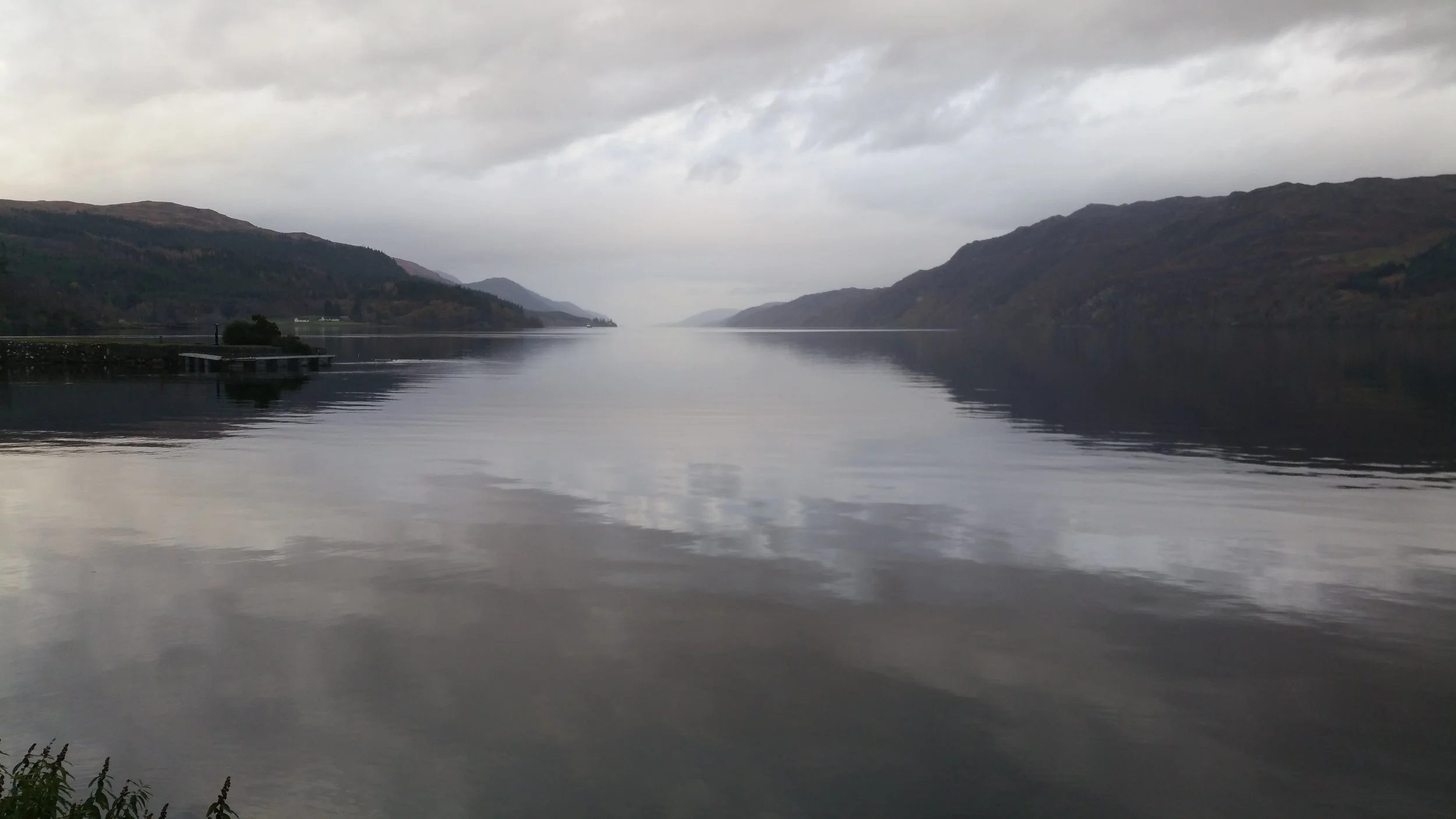
Figure 1: Photograph of Loch Ness from Fort Augustus
Image Credit: Simon Medhurst
In the early hours, before the day has decided what it will be, everything is quiet and the light is undecided, not dark any more, not yet bright, the weather still unchosen. And in that in-between hour, the world is grey.
It is not the fixed grey of a paint chart or a pavement, but a soft, moving, pearl and violet grey, the light gathering itself before it decides to be light, with sea and sky the same colour, nothing switched on, everything about to.
There is mist over a field, and fog rolling in off the water, slate wet with rain, the back of a gull, a dove’s breast, flint, lichen on stone, storm light, the neck of a pigeon, weathered wood gone silver, and not one of these greys stays still, or stays the same, or is ever empty of colour, but some are cool and blue, some warm and brown, some almost pink, some the soft ash of woodsmoke.
These are the living greys, the greys of the natural world. The grey you stand inside, of fog and dawn and storm, and the grey you hold in your hand, of feather and stone, made by light and weather and time. Look closer at any one of them and it will not stay grey. The neck of a pigeon, the most overlooked bird there is, looks barely grey at all when the light catches it, shimmering into iridescent green, rich purple, deep violet, there and gone as the bird turns its head. It is the same with any grey creature. From far off a gull, a wolf, a moth against bark reads as one flat neutral tone, lost into rock or water or sky, and that losing is how it survives. But come close, and the grey is as alive and fluid as any other, banded and shifting, warm and cool at once, never the neutral it seemed from a distance. Grey is how they disappear, and also, up close, how they are most alive.
The Living Greys
My favourite greys are the greys of sky and sea. They can change a mood in an instant, and then shift, and change it again. The sky before rain is the one I love most. The grey gathers, heavy and charged, and then everything goes still. The wind drops, the birds go quiet, the air holds. That stillness before a storm is its own kind of hush, a held breath, a waiting. You know it is about to break, and then it does. The sky opens, lightens, lit up from somewhere, and everything is released.
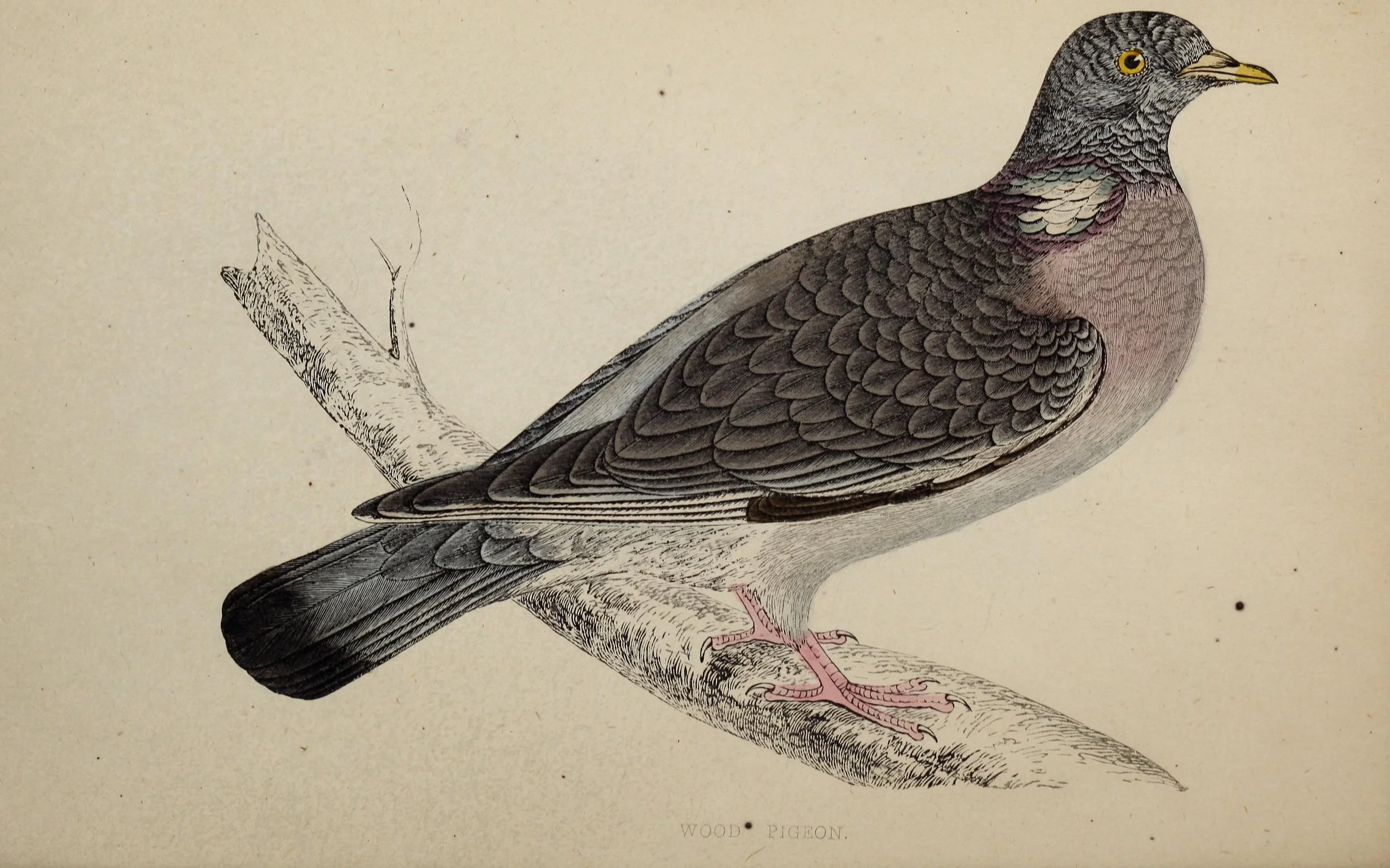
Wood Pigeon (coloured engraving) from A History of British Birds, 1862, by the Rev. F.O Morris
Image Credit: Wikimedia Commons
Some greys you hold rather than watch. There is slate, cool and layered and deep, a grey you can look right into, and limestone, chalky and warm, full of grain and old shells, and flint, smooth and cool in the hand. And a pebble from a beach, worn round and smooth by the sea, the kind you turn over and over in your pocket without thinking.
And then there are the soft greys, the breast of a dove, rabbit fur, the underdown of a feather, the fur of a grey cat. These are the greys that comfort, the ones you want to touch, soft and warm and safe.
Two Painters
Not everyone has loved grey. Kandinsky called it motionless, toneless, a grey without hope, and he was right, in a way. There is a grey like that, the grey of concrete. You cannot look into it, the light reaches it and stops. It was made to a specification, and it will never become anything else. It is not alive.
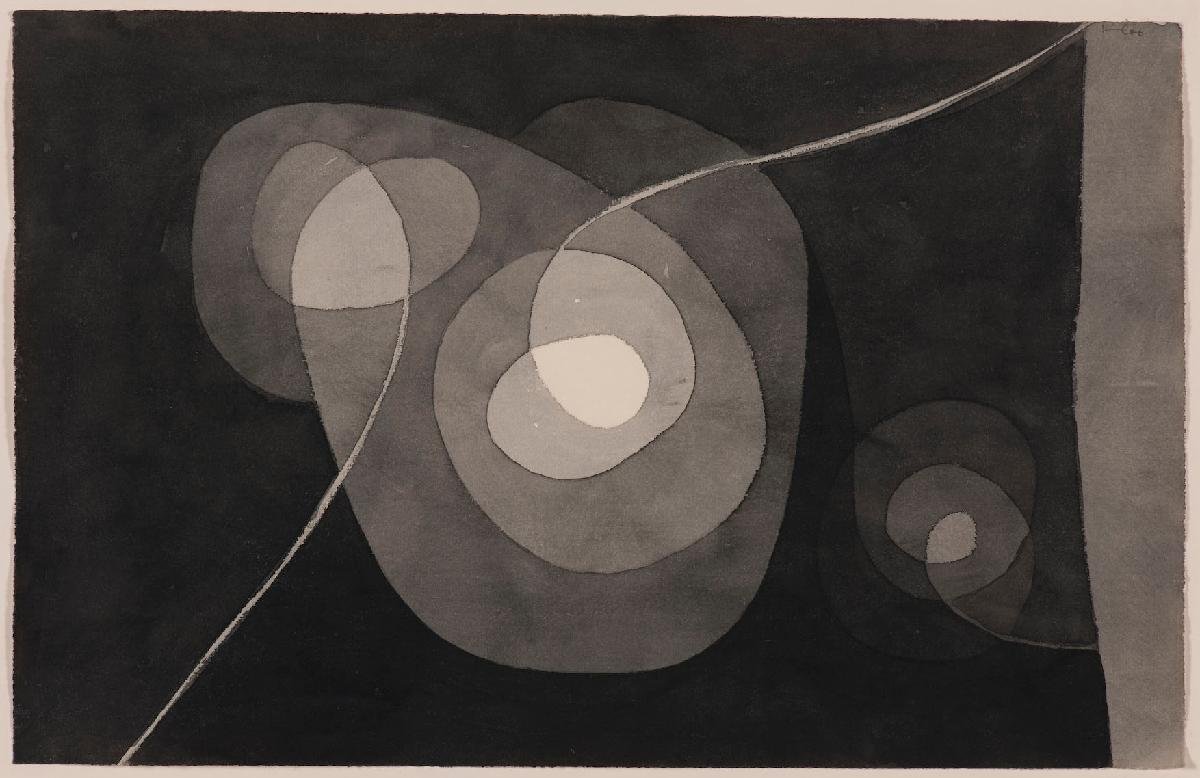
Spiral Screw Flowers II [Spiralschraubenblüten II], watercolour painting, by Paul Klee, 1932
Image Credit: Sprengel Museum via Wikimedia Commons
Klee taught alongside Kandinsky, and loved grey where Kandinsky could not. For him it was the centre of the whole colour world, the point where all colours meet and are held, the place everything begins. Not a dead neutral but the richest place of all, full of every colour it had not yet become. That is the grey I know, not an absence but a held breath, not the end of colour but the place it comes from.
We say “a grey day” and we mean a dull one, something flat and low with nothing much to it. But I have never understood this, because a grey day is when the sky is at its most alive, shifting and layered, never the same grey for long. We have taken the richest sky there is and made its name a word for dreariness.
I think grey is misunderstood. It is called dull, or lesser, or the absence of colour. But in my own work, when I choose colours for a space or for a person, I often reach for a grey, or a colour with a grey wash through it, softened, quietened. I do not mean the cold, flat greys, but the warmer, more complex ones, with something living inside them, and I reach for them not because they are weaker than a bright colour, but because they ask less of you. A pure bright colour is definite, it fills the room and leaves no space, but a greyed colour leaves a door open, quieter, moodier, stiller, and it lets you settle. I use grey in place of black, too, when black would be too harsh, for a grey line still separates one thing from another, still gives the eye its edge, but gently, without the shout.
That is not a lesser colour. In a world that is always asking for your attention, a colour that asks nothing is a kind of rest. And yet grey does ask one thing of you, though it asks it gently. A bright colour you take in at a glance and are done with, but grey you have to stop for, because it does not announce itself, and you must slow down and look, and keep looking, before it gives up its warmth, its violet, the shift inside it. That slow and patient looking is a quiet thing to do, and it settles you. Of all the colours, grey is the one that asks you to be still.
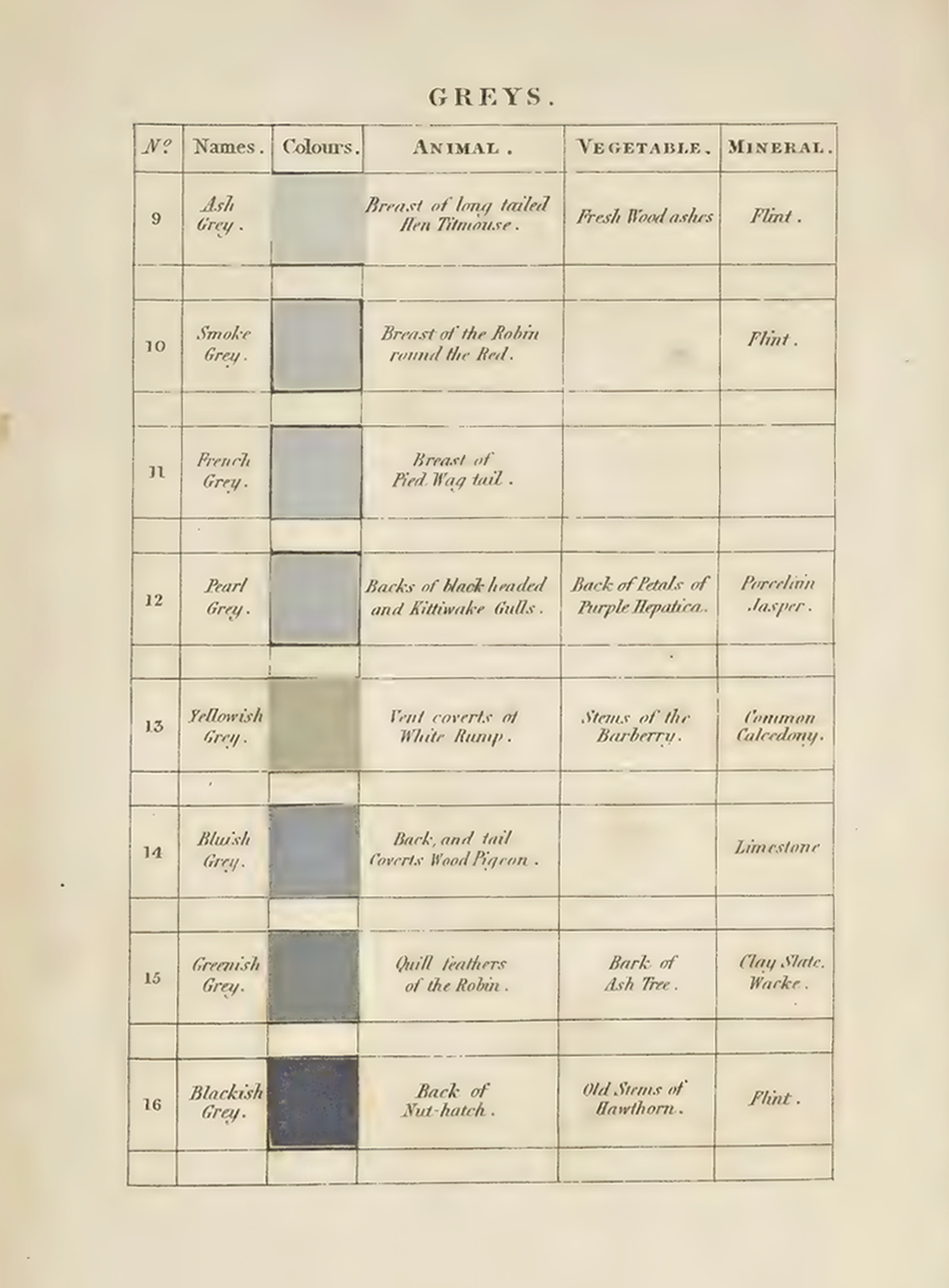
Greys colour plate from Werner's Nomenclature of Colours, 1821 edition, Patrick Syme
Image Credit: Public Domain Review
Werner’s Greys
Werner’s Nomenclature of Colours named each shade by pointing at the living world, not a number or a swatch but an animal, a plant, a mineral that carried the colour. There are eight greys in it, and they are named the way you would name them if you had spent your life looking.
There is Ash Grey, from fresh wood ashes and the breast of a long-tailed titmouse; Smoke Grey, from the robin’s breast around the red; French Grey, from the breast of a pied wagtail; Pearl Grey, from the backs of the black-headed and kittiwake gulls; Yellowish Grey, from the barberry stem; Bluish Grey, from the wood pigeon; Greenish Grey, from the quill feathers of the robin and the bark of the ash; and Blackish Grey, from the back of a nuthatch and the old stems of hawthorn.
But looking through his eight, I don’t think he listed the greys I love most. His greys are cool ones, ash and smoke and pearl. The warm greys are missing, the ones with pink in them, or purple, the soft mushroom greys I reach for most, the silt grey of my own necklace. He gave the whites a reddish white and a purplish white. His greys he kept cool.
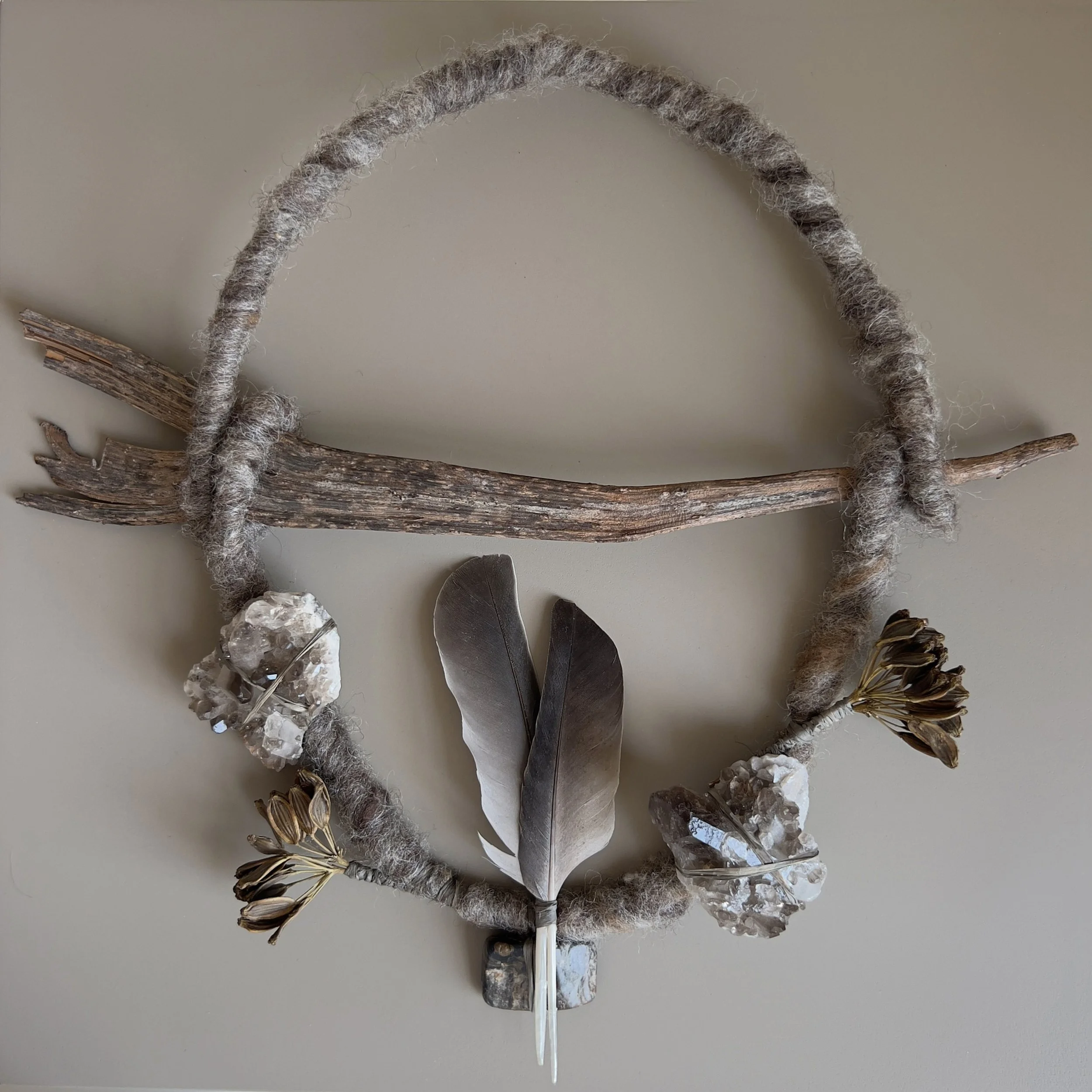
Figure 5: Greys Necklace 1, 2026, Pigeon feathers, Jacob batt natural grey fleece, smoky quartz, stromatolite, natraj wood, dried angelica seed heads. Dawn Weller Studio
Image Credit: Dawn Weller
I have always been this way about colour. When I see a grey I love, on a wing, in a shell, in the silt at the edge of a river, I want to examine it, to see exactly what colour it is, to name it, to find its precise match. Grey is the hardest of all to match, its differences so fine, one cool, one warm, one faintly pink, that I can lose an hour in the looking. I do not mind. That looking is the most settled I ever am.
And yet grey never holds still. I know this even as I chase it, the exact grey I match today will have shifted by the time the light has moved. Perhaps that is why I look so closely, and want to hold it so precisely, not because I can keep it, but because I cannot.
It is part of why I love what Werner was doing. He was matching colours too, pinning each one to the living thing that carried it, refusing to let a shade stay vague. And perhaps he knew, as I do, that the colour would never quite sit still for him. We are two hundred years apart, held by the same fascination.
I have turned mine into a way of working. I make pieces from the exact colours of the natural world, gathered and matched and held together, and I make them for hospitals and healing spaces, because colour, nature and wellbeing are the three things I keep returning to. The necklace is one of these, its greys gathered from feather and fleece and quartz, no two of them the same and yet a common grey running through them all, each one chosen, and each one already, quietly, becoming something else.
The Pause
Imagine, for a moment, a world with the colour drained out of it, only grey. It sounds like a kind of death, and yet I don’t think it would feel that way. It would feel held, contained, like the pause before something, the ground going quiet before it grows.
We know this world, in fact, because it comes every winter, when the sky lowers, the colour leaves the land, and everything greys over. But the grey of winter is not an ending, it is the year holding its breath, all of it still potential, everything underneath waiting, gathered, about to.
This is what grey has always been to me, not the absence of colour but the moment before it, the dawn before the day, the stillness before the storm, the breath between what was and what is coming, a door held open.
And so I keep looking, at the shifting sky, the wet slate, the grey that is never quite still, always the pause before, always at the threshold of becoming.
References
Kandinsky, W. (1911) Concerning the Spiritual in Art [Über das Geistige in der Kunst]. Trans. M. T. H. Sadleir (1914). London: Constable & Co.
Klee, P. (1961) The Thinking Eye: The Notebooks of Paul Klee [Das bildnerische Denken]. Ed. Jürg Spiller. London: Lund Humphries.
Syme, P. (1821) Werner's Nomenclature of Colours. 2nd edn. Edinburgh: William Blackwood.
Images
Figure 1 (Loch Ness): Simon Medhurst
Figure 2 (Wood Pigeon): https://commons.wikimedia.org/wiki/File:A_history_of_British_birds_-_by_the_Rev._F._O._Morris_(1862)_(14566020727).jpg
Figure 3 (Spiral Screw Flowers II ): https://commons.wikimedia.org/wiki/File:Spiralschraubenbl%C3%BCten_II,_1932_-_Paul_Klee.jpg
Figure 4 (Greys Colour Plate): https://publicdomainreview.org/collection/werner-s-nomenclature-of-colours-1814/
Figure 5 (Greys necklace): Dawn Weller Studio.

_(14566020727).jpg)
